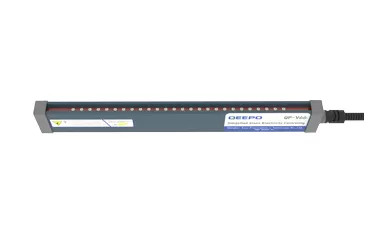
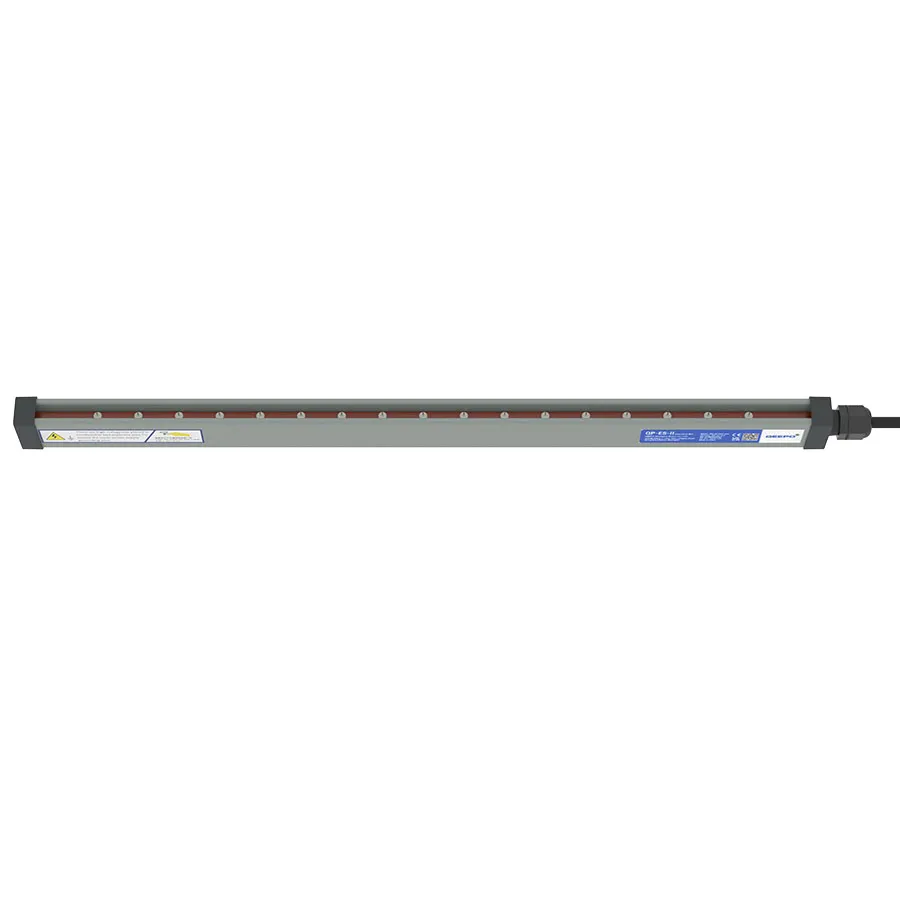
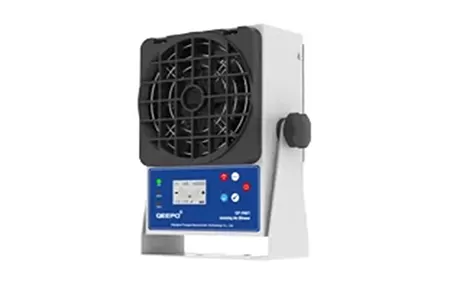
In modern manufacturing environments, electrostatic discharge (ESD) continues to be one of the most overlooked yet impactful causes of product defects, production instability, and unnecessary downtime. Industries such as electronics, packaging, plastics, textiles, and precision assembly increasingly depend on advanced static control technologies to maintain stable and efficient production workflows.
In this context, working with experienced static eliminator manufacturers and deploying reliable static elimination equipment has become a core requirement for stable manufacturing performance. However, real-world results depend not only on equipment quality, but also on correct system selection, installation precision, validation, and ongoing maintenance.
Before selecting solutions from professional equipment providers, it is essential to evaluate the production environment thoroughly. Many issues in electrostatic control systems originate not from product quality, but from poor application matching.
Material properties are the starting point. Different substrates such as plastic films, paper, textiles, and electronic components accumulate and retain electrostatic charge in different ways. These differences determine how ionization-based systems should be configured.
Production speed is equally important. High-speed production lines require faster neutralization response and broader ion coverage, while slower processes may prioritize localized precision control. Environmental conditions such as humidity, dust concentration, and temperature fluctuations also influence system performance.
Space layout and installation geometry further impact efficiency. The distance between charged surfaces and the neutralization point must be optimized to ensure effective discharge. At this stage, many manufacturers consult experienced static eliminator manufacturers to ensure system compatibility with real production conditions.
Proper installation is one of the most critical factors influencing long-term system effectiveness. Even advanced static elimination equipment may fail to deliver expected performance if installation guidelines are not followed correctly.
Ionizers should be positioned as close as safely possible to the target surface to maximize neutralization efficiency. Incorrect distance can result in incomplete discharge or uneven static control across the material.
Alignment is equally important. Uniform ion distribution ensures consistent electrostatic neutralization across the entire working area. Poor angle adjustment may create residual charge zones, especially in high-speed applications.
Grounding stability is another essential factor. Weak or unstable grounding can reduce system efficiency and affect long-term reliability. In air-assisted systems, clean and dry compressed air must be maintained to ensure stable ion output.
To avoid interference issues in complex production environments, many factories collaborate early with static eliminator manufacturers during installation planning.
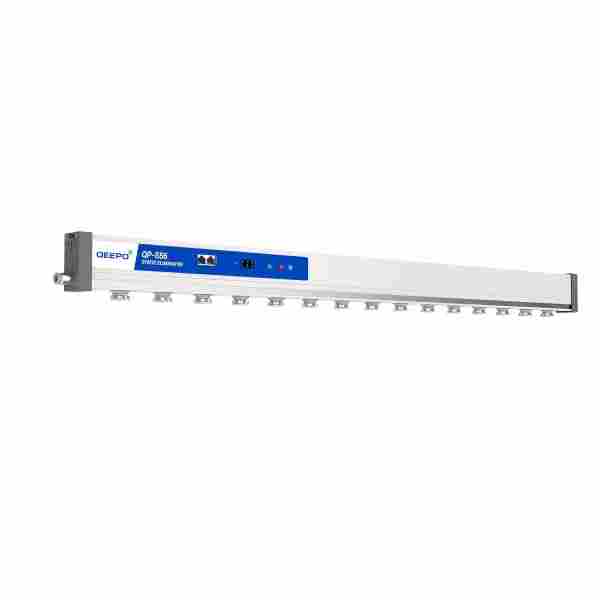
After installation, validation ensures that the electrostatic control system is functioning correctly under real production conditions. This confirms whether the deployed static elimination equipment is achieving the expected discharge performance.
Surface voltage measurement is commonly used to compare electrostatic levels before and after activation. A properly functioning system should significantly reduce charge levels within a short time, depending on material type and operating speed.
Charge decay testing provides additional insight into how quickly static is neutralized during production. Faster decay typically indicates more efficient ion balance and better system performance.
Once baseline performance is confirmed, optimization becomes an ongoing process. Adjustments such as modifying installation distance, refining airflow direction, or repositioning ionizers can significantly improve system efficiency.
Some static eliminator manufacturers, including QeePoeSD, recommend periodic performance reviews whenever production materials, speed, or environmental conditions change.
Long-term performance of electrostatic control systems depends heavily on structured maintenance practices. Even high-quality solutions from leading static eliminator manufacturers require regular servicing to maintain stable ion output.
Ionizing components naturally accumulate dust and particles during operation, which can reduce efficiency if not cleaned regularly. Air filters in air-assisted systems should also be inspected and replaced periodically to ensure clean airflow.
Grounding points and electrical connections must be checked to prevent instability or performance degradation. Voltage consistency is another important parameter that should be monitored during maintenance cycles.
Preventive maintenance is especially important in continuous production environments, where system downtime directly affects output efficiency. Well-designed static elimination equipment is typically engineered for easy maintenance access to reduce service time.
Even reliable systems from static eliminator manufacturers may encounter operational challenges in real production environments. Understanding common issues helps improve troubleshooting efficiency and reduce downtime.
Reduced neutralization performance is often caused by contamination on ionizing elements or incorrect installation distance. In some cases, insufficient airflow or blocked ion paths may also contribute to performance decline.
Unstable operation may result from power fluctuations or grounding issues, leading to inconsistent ion output.
Uneven static control across a surface is often linked to airflow imbalance, improper positioning, or inconsistent material movement.
In such situations, experienced static eliminator manufacturers often provide diagnostic support and modular solutions to restore stable operation quickly.
When electrostatic control systems are correctly installed and consistently maintained, they deliver significant improvements in production efficiency and product quality.
Stable static control reduces defects caused by dust attraction, material sticking, and misalignment during processing. This directly improves yield rates and reduces scrap.
In automated production environments, reliable static control also minimizes unexpected interruptions, allowing production lines to operate more smoothly and consistently.
Over time, even small improvements in defect reduction can result in substantial cost savings. Optimized performance of static elimination equipment also reduces maintenance frequency and improves system lifespan.
Manufacturers investing in solutions from trusted static eliminator manufacturers benefit from improved operational stability and stronger long-term ROI. More detailed specifications and solution options can be explored via the products page, while technical consultation and project support are available through the contact page.
Companies such as QeePoeSD focus on integrating electrostatic control technologies into modern production systems to help manufacturers achieve consistent output and efficiency.
Effective electrostatic control is not achieved through equipment alone, but through a complete lifecycle approach that includes proper assessment, installation, validation, and maintenance. High-quality static elimination equipment, when correctly implemented, can significantly enhance production stability, reduce defects, and improve overall manufacturing efficiency.
Working with experienced static eliminator manufacturers ensures that every stage—from system selection to long-term optimization—is aligned with real production needs. This approach not only improves operational reliability but also maximizes return on investment.
For manufacturers seeking professional solutions and technical support, QeePoeSD provides comprehensive electrostatic control systems designed for modern industrial environments.
It is used to neutralize electrostatic charges in production environments, preventing dust attraction, material sticking, and product defects.
Because different materials and production speeds require different configurations, proper assessment ensures the system matches real operational conditions.
Basic cleaning is usually required weekly or monthly depending on environment, while full inspections are recommended every 6–12 months.
Common signs include increased defects, material sticking issues, dust attraction, and inconsistent product quality.
Yes, incorrect distance, poor grounding, or improper alignment can significantly reduce the efficiency of the system even if the equipment is high quality.
They typically provide installation guidance, technical support, diagnostic tools, and system optimization recommendations based on production conditions.

 +86-17717352246
  andy@qeepo.cn
 English
  日本語
日本語  한국어
한국어  français
  Español
  русский
  português
  العربية
  tiếng việt
  ไทย
ไทย  Polska