Static electricity remains a persistent challenge in manufacturing, electronics assembly, printing, packaging, and cleanroom environments. Many facilities rely on a static ionizer fan to neutralize charges, yet issues like dust attraction, material adhesion, ESD damage, and production slowdowns continue. This comprehensive guide explores why a static ionizer fan may not fully resolve every problem, identifies root causes, provides accurate diagnosis methods, and outlines effective solutions.
At Qeepo ESD, we specialize in advanced static control solutions that help industries maintain optimal performance and product quality.
A static ionizer fan works by generating a balanced stream of positive and negative ions carried by airflow to neutralize surface charges on insulators. However, its effectiveness has limitations. Key constraints include distance and airflow reach because ions recombine quickly in air, so effectiveness drops sharply beyond the optimal range, often 0.5–2 meters depending on the model. Charge generation rate also plays a role as high-speed processes or areas with intense triboelectric charging from friction between materials can create charges faster than a single fan can handle. Maintenance needs are another factor since emitter points accumulate dust and oxidize over time, reducing ion output if not cleaned regularly. Environmental interference such as extreme dryness, humidity, contaminants, or improper placement can further hinder performance. Even high-quality ionizing fan static units achieve ion balance of ±1V to ±10V under ideal conditions, but real-world variables often prevent complete elimination.
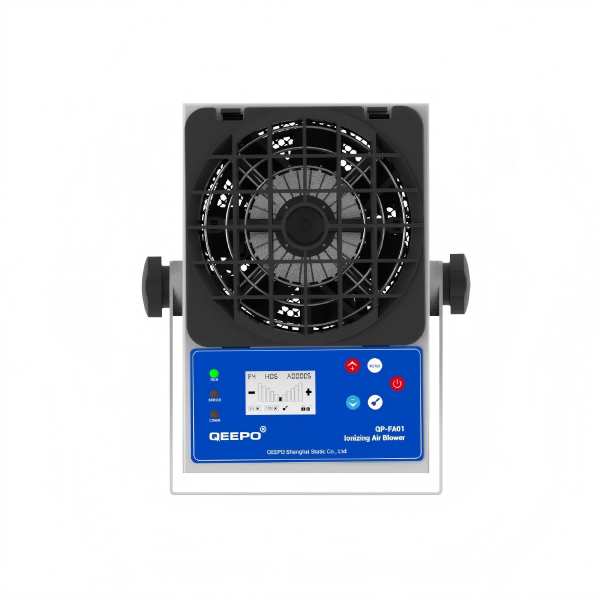
Several factors explain why static ionizer fan solutions fall short. Improper placement and coverage occur when the fan is positioned too far, at the wrong angle, or in obstructed airflow areas, which limits ion delivery. Insufficient maintenance is common as dirty or worn emitters drastically reduce performance, and unbalanced output can even generate static on some surfaces. High charge generation processes affect fast-moving webs, unwinding rolls, or repetitive friction in plastics, films, or paper that create charges faster than a single fan can handle. Ungrounded or isolated conductors represent another issue because ionizers primarily target insulators while conductive items need proper grounding. Material properties matter too, as highly insulative materials such as certain plastics or dry powders hold charges tenaciously. Finally, contamination and process speed allow dust or rapid production lines to overwhelm localized ionization. Qeepo ESD offers a range of reliable static ionizer fan models and complementary tools.
Environment plays a critical role in ionizing fan static effectiveness. Low humidity below 30-40% RH increases charge generation and slows ion mobility, though ionizers still function better than no control, and humidification can help but must be controlled to avoid condensation. High humidity or condensing conditions risk electrical shorts or reduced ionizer lifespan. Temperature extremes affect air density and ion lifetime. Airflow disruptions from drafts, enclosures, or nearby equipment can divert ionized air. Airborne contaminants cause particles to coat emitters, requiring more frequent cleaning. Seasonal changes such as winter dryness often exacerbate issues, making year-round monitoring essential.
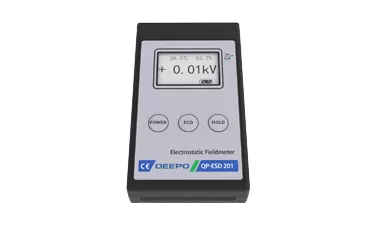
Accurate diagnosis prevents wasted effort on ineffective fixes. Measure static levels using an electrostatic field meter or non-contact voltmeter at multiple points and times during the process while recording peak voltages, as common issues appear above 1-5 kV. Assess ionizer performance by checking ion balance and decay time with a charge plate monitor and verifying airflow and emitter condition. Map charge sources to identify triboelectric hotspots such as friction points and separation areas. Evaluate grounding by testing resistance to ground for all conductive elements with a target under 1 ohm for many applications. Environmental logging helps monitor humidity, temperature, and airflow. Process observation notes symptoms like dust attraction, web misalignment, or shocks. Professional on-site audits can provide data-driven insights.
Maximize your static ionizer fan with these proven strategies. Position fans 0.3–1 meter from targets, aiming directly at charge-prone areas with unobstructed flow. Implement scheduled maintenance by cleaning emitters weekly to monthly based on environment and replacing as needed. Combine with grounding to ensure all machinery, work surfaces, and personnel are properly grounded. Use multiple units or overhead systems for larger areas. Optimize airflow by matching fan speed and coverage to process requirements. Monitor continuously with units that include alarms for ion balance issues. Train staff on proper use and symptom recognition. Regular verification ensures consistent results and extends equipment life.
Relying solely on one static ionizer fan is rarely optimal for demanding applications. Combine it when handling high-speed or high-charge processes, dealing with complex geometries or large areas, requiring ultra-low static levels such as in electronics or pharmaceuticals, facing variable environmental conditions, or experiencing recurring contamination or adhesion issues. Layered solutions that include grounding plus ionization plus humidity control plus material selection deliver superior results and higher ROI through reduced defects and downtime. Qeepo ESD provides integrated systems designed for these scenarios.
| Method | Best For | Pros | Cons | Typical Effectiveness |
|---|---|---|---|---|
| Static Ionizer Fan | Workstations, localized areas | Easy install, covers moderate areas, no contact | Limited range, needs maintenance, affected by environment | High in ideal conditions (80-95% neutralization) |
| Grounding | Conductive equipment & personnel | Simple, reliable, low cost | Ineffective on insulators | Excellent for conductors |
| Humidification | Overall facility control | Reduces charge generation | Risk of condensation, higher energy use | Moderate (supplementary) |
| Anti-Static Bars/Ionizers (non-fan) | High-speed webs, close proximity | Fast neutralization | Requires precise positioning | Very high up close |
| Conductive Materials/Additives | Product design | Prevents buildup at source | May alter material properties | Preventive, long-term |
| Combination Systems | Complex processes | Comprehensive coverage | Higher initial cost | Optimal (95%+) |
This table highlights why a static ionizer fan often works best as part of a multi-layered approach.
Persistent static problems despite using a static ionizer fan or ionizing fan static usually stem from a combination of environmental factors, improper application, maintenance gaps, and unaddressed charge sources. By understanding these limitations, accurately diagnosing issues, and implementing best practices—often through a comprehensive static control strategy—facilities can significantly reduce risks and improve efficiency.
Investing in quality equipment, regular monitoring, and expert guidance ensures long-term success. At Qeepo ESD, we are committed to helping businesses overcome static challenges with reliable, high-performance solutions tailored to real-world needs.
For more information on our products or to discuss your specific requirements, please contact us or browse our product catalog.
Residual charges often result from insufficient coverage, dirty emitters, high charge generation rates, or environmental factors like low humidity. Proper positioning, maintenance, and complementary measures usually resolve this.
Clean emitters at least monthly, or more frequently in dusty environments. Check ion balance regularly and follow manufacturer guidelines for optimal performance.
Low humidity increases charge buildup and can slow neutralization, but a well-maintained static ionizer fan still provides substantial benefits. Combining with humidity control is often ideal.
Upgrade or add solutions when dealing with high-speed lines, large areas, sensitive electronics, or persistent issues despite proper use of the fan.
Yes, when balanced properly (± a few volts). Unbalanced units can create issues, so choose quality models with monitoring features and verify performance regularly.
Use field meters for voltage readings, charge plate monitors for ionizer testing, environmental logging, and process observation. Professional audits can accelerate accurate identification.

 +86-17717352246
  andy@qeepo.cn
 English