Electrostatic generators, or static electricity machines, have a fascinating history that spans several centuries. These devices play an essential role in producing and controlling static electricity for various applications, including scientific experiments, industrial processes, and educational demonstrations. From generating significant static charges to being integral in modern static control products, the evolution of electrostatic generators showcases human ingenuity and the relentless pursuit of understanding electricity. This article will delve into their definition, historical evolution, key components, and famous examples like the Van de Graaff generator, helping readers appreciate and comprehend the science behind static charge generation.
Electrostatic generators are devices designed to create and manage static electricity. They operate on the principles of electrostatics, which is the study of electric charges at rest. The basic concept involves manipulating materials to accumulate and store charge, later releasing it for various purposes.
| Type | Operation Principle | Use |
|---|---|---|
| Friction Machine | Rubbing two materials together | Educational purposes |
| Electrostatic Field Meter | Measure electric field strength | Industrial applications |
| Static Charge Generator | Induction method | Static control |
These machines utilize basic principles such as friction, induction, and conduction to generate static electricity. Friction machines are often used in educational settings to demonstrate electrostatic forces. Similarly, electrostatic field meters play a crucial role in measuring the electric field strength in industrial environments.
The invention of electrostatic generators can be attributed to several prominent historical figures. Benjamin Franklin is known for his pioneering work in electrical theories, which laid the groundwork for future inventions. But the development of electrostatic devices began much earlier.
| Inventor | Contribution | Date |
|---|---|---|
| Wilhelm Gottfried Leibniz | Adaptation of the friction machine | Late 17th Century |
| Francis Hauksbee | Revamping static electricity machine | 1700s |
| Robert J. Van de Graaff | Van de Graaff generator | 1929 |
Francis Hauksbee enhanced the friction machine by developing a glass globe filled with mercury, demonstrating static electricity phenomena in the 1700s. Wilhelm Gottfried Leibniz's contributions to electrostatic theories set the stage for the evolution of electricity machines. Meanwhile, Robert J. Van de Graaff introduced his eponymous electrostatic generator, capable of producing high voltage outputs for research in both atomic physics and nuclear engineering.
The evolution of static machines highlights advancements in technology and materials, improving efficiency and expanding applications. From early friction machines used primarily as scientific curiosities, modern-day static generators serve more practical purposes in various areas.
| Era | Advancements | Applications |
|---|---|---|
| Early 18th Century | Simple friction devices | Laboratory experiments |
| 20th Century | Mechanical improvements | Industrial processes |
| 21st Century | Digital and Automated systems | Static control devices, static eliminator bars |
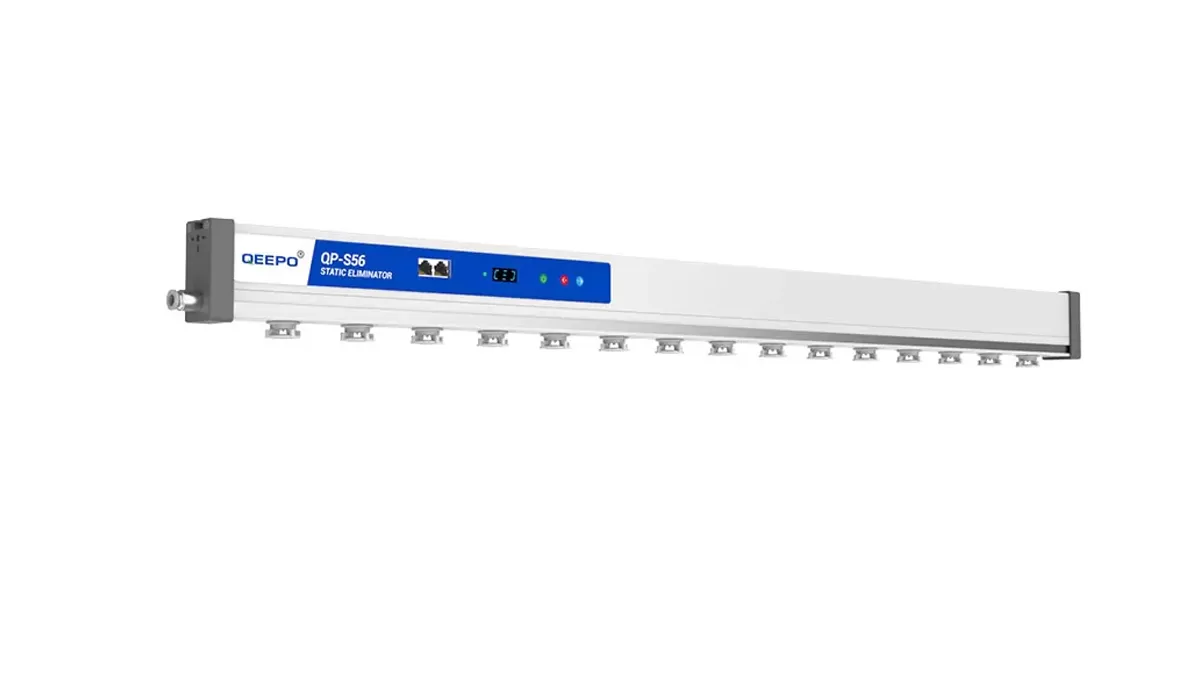
The advancements in mechanical aspects during the 20th century extended the use of static machines beyond mere educational tools. In the 21st century, innovations such as static eliminator bars and anti static devices have become indispensable in industrial settings, where controlling static discharge is crucial for safety and operational efficiency.
Understanding the key components of an electrostatic generator is essential in appreciating its operational dynamics. These components work together to create, accumulate, and discharge static electricity effectively.
| Component | Function | Example |
|---|---|---|
| Charge Collector | Accumulation of charge | Metal sphere in Van de Graaff generator |
| Insulating Material | Prevents charge loss | Glass or acrylic |
| Motor | Creates motion for charge generation | Electric motor |
A typical generator consists of a charge collector, insulating materials, motors, and sometimes a voltage regulator. For example, the Van de Graaff generator uses a metal sphere as the charge collector, while belts within it transport the charge produced through static meter insights. The setup and efficiency of these components drastically influence the machine’s efficacy in creating and controlling static electricity.
Among various electrostatic generators, the Van de Graaff generator stands out due to its widespread use and unique capabilities. It has become a feature in teaching laboratories, demonstrations, and various scientific research projects.
| Generator | Unique Feature | Application |
|---|---|---|
| Van de Graaff | High-voltage generation | Educational, nuclear research |
| Wimshurst Machine | Twin rotor configuration | Physics experiments |
| Electrophorus | Portable charge collector | Static electricity demonstrations |
The Van de Graaff generator, producing huge static charges via a moving belt, often inspires both fascination and practical applications. Additionally, devices like Wimshurst Machines and the Electrophorus showcase different methodologies for static charge generation, helping expand understanding of static electricity's potential benefits and functionalities.
The journey through the history and development of electrostatic generators underscores the combination of human curiosity and technological advancement. From basic friction machines to major scientific apparatuses, these devices have been crucial in evolving the understanding and management of electricity. As technology progresses, newer and more efficient models continually emerge, perhaps even featuring AI-driven insights or enhanced ionizer fans and electrostatic detector capabilities for precision and safety. Whether you're exploring static control products or interested in learning about anti static bars and their impact, this historical perspective provides a comprehensive overview of electrostatic generators' remarkable evolution.

 +86-17717352246
  andy@qeepo.cn
 English
  日本語
日本語  한국어
한국어  français
  Español
  русский
  português
  العربية
  tiếng việt
  ไทย
ไทย  Polska