In modern industrial manufacturing, static electricity is usually discussed as a problem that needs to be eliminated. However, in many advanced automated production processes, controlled static electricity is actually a powerful tool. From cast film extrusion and plastic packaging to mold labeling (IML) and perforation detection, generating a temporary electrostatic charge allows different materials to bond together instantly without the use of chemical adhesives or mechanical clamps.
Achieving a stable, uniform, and safe non-contact material bonding setup requires an integrated, industrial-grade solution. You cannot simply purchase a standalone power supply or a random charging electrode and expect flawless high-speed performance. To achieve optimal efficiency, a manufacturing line requires a perfectly synchronized system.
By pairing the advanced QP-EH Electrostatic Generator control host with QEEPO’s high-performance QP-V66 Static Charging Bars, factory engineers can deploy a heavy-duty, reliable, and intelligent material bonding architecture. Let us explore the system engineering, technical synchronization, and operational advantages of combining these two industry-leading technologies.
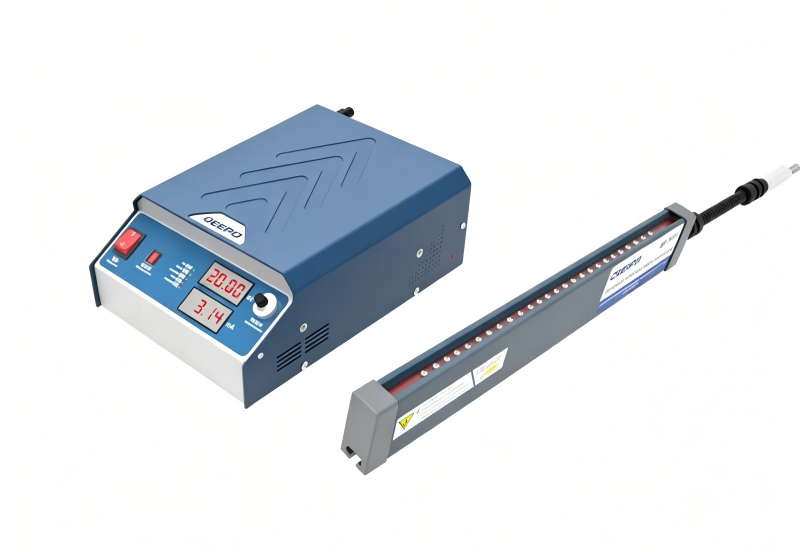
To build a truly reliable industrial charging network, it helps to visualize the hardware setup through a "brain and limbs" framework.
The QP-EH serves as the core power supply and safety center of your operations. As a premium-tier electrostatic generator, it utilizes advanced high-voltage technology to convert standard factory electrical inputs into highly regulated, adjustable high-voltage currents. It features an intuitive digital display interface that allows operators to monitor critical performance metrics in real time, while a built-in protective circuit actively scans for system irregularities on the line.
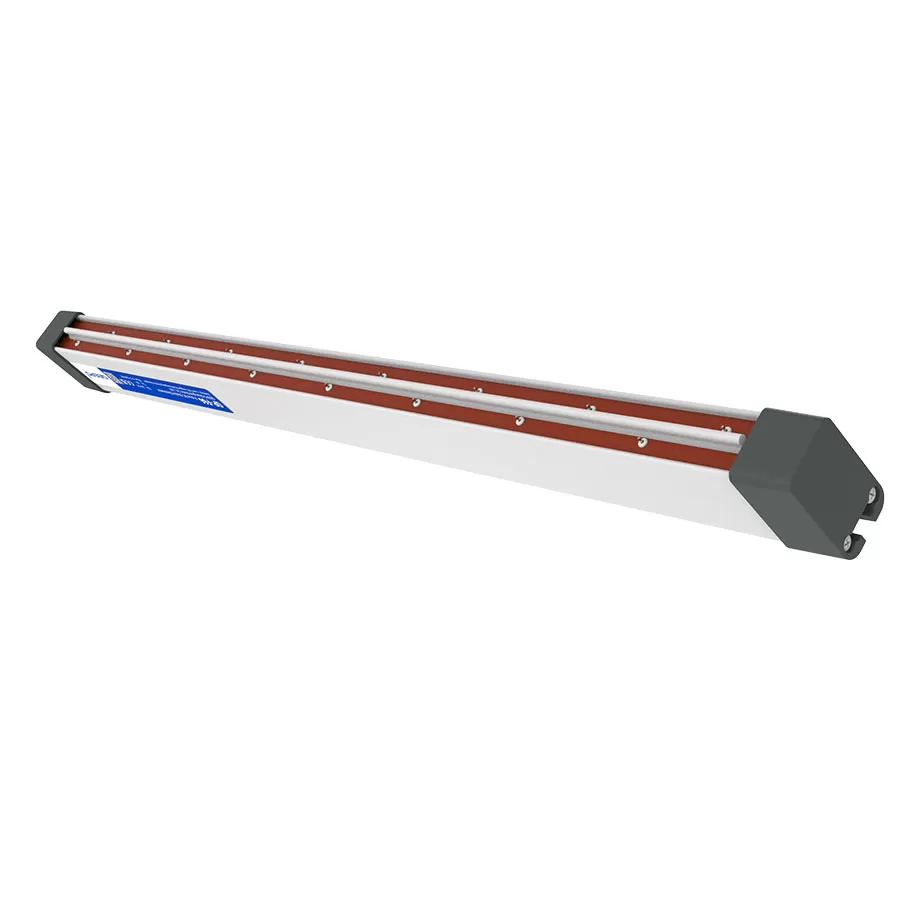
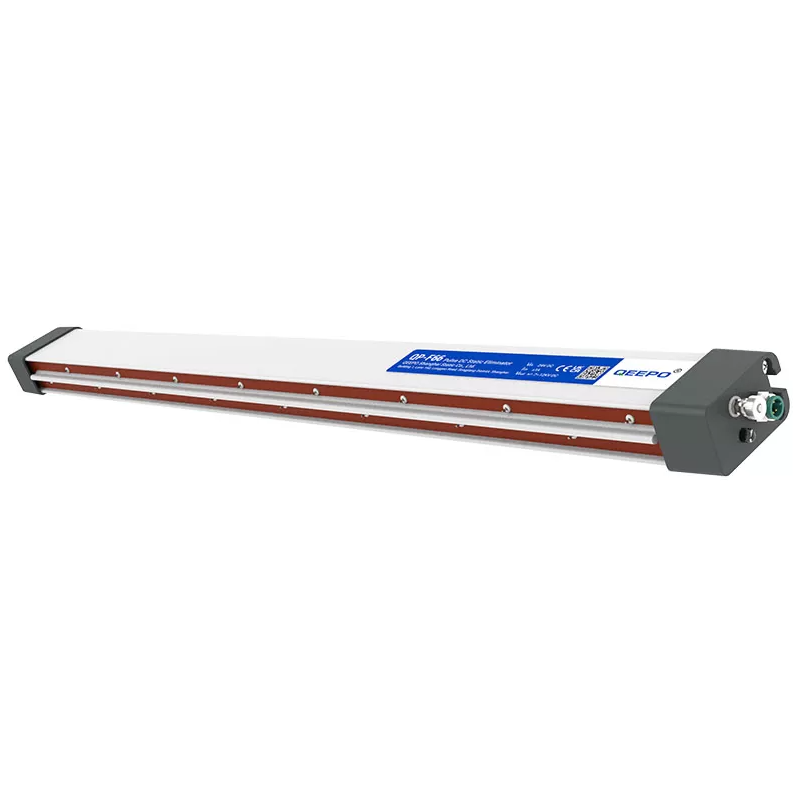
The QP-V66 charging rod acts as the execution mechanism of the system. On its own, it does not generate high voltage; it is supporting equipment engineered to receive electrical power from a central static charge machine. Lined with high-performance ion discharge needles, the bar projects a uniform, controlled electrostatic field onto target materials. It is designed to withstand continuous 24-hour manufacturing cycles without drop-offs in charge density.
When integrating new hardware into automated machinery, matching technical specifications is critical for maintaining plant safety and equipment longevity.
Below is a detailed technical parameter matrix highlighting how the QP-EH control host and the QP-V66 electrode rods integrate seamlessly into a single production ecosystem:
| Technical Metric | Industrial Operational Parameter | Manufacturing Value |
|---|---|---|
| Output Connectivity | 4 Independent High-Voltage Ports | Drives up to 4 bars simultaneously from a single host |
| User Interface Layout | Digital Display (Voltage, Current, Power) | Allows precise real-time monitoring of machine metrics |
| Safety Architecture | Built-in Overload & Remote Alarm Circuit | Automatically cuts high voltage during abnormal discharge |
| Technical Metric | Industrial Operational Parameter | Manufacturing Value |
|---|---|---|
| Maximum Voltage | Rated up to +/- 60KV maximum endurance | Handles extreme high-voltage applications easily |
| Current Allocation | Low operating threshold under 2.5mA | Ensures safe discharge with minimal electrical risk |
| Electrode Pitch | 5mm spacing (QP-V66-5) or 10mm (QP-V66-10) | Matches high-density or standard bonding needs |
| Installation Range | Recommended distance of 30mm to 100mm | Provides optimal non-contact electrostatic attraction |
| Sizing Flexibility | Custom lengths from 150mm up to 4000mm | Scalable for compact machinery or wide roll lines |
One of the greatest operational advantages of the QEEPO system architecture is the multi-port capability of the control host. The QP-EH Electrostatic Generator is engineered with four independent high-voltage output ports. This enables a factory to run up to four separate static charging bars simultaneously from a single central power module.
This multi-port design offers immediate cost and space-saving advantages for your manufacturing facility:
Reduced Capital Expenditure: Instead of purchasing four individual power supplies for a multi-stage production line, a plant only needs to invest in a single QP-EH control unit.
Simplified Cabinet Space: Consolidating power distribution into a single industrial enclosure footprint saves valuable space inside your factory's main automation control cabinets.
Unified Monitoring: Machine operators can track the voltage, current, and wattage consumption of multiple charging stations in one central location on the equipment dashboard.
Because different manufacturing environments present unique technical challenges, matching your charging setup to your specific material thickness and line speed is essential. Understanding how this system layout functions in real-world conditions is the first step toward maximizing your daily production yield.
In the cast film industry, molten polymer is extruded from a flat die onto a polished, rotating chill roll. As the film leaves the die, its edges tend to neck in and thicken, creating structural non-uniformity. By installing a micro-length QP-V66 bar driven by a QP-EH host directly over the film edge, a localized charge forces the molten plastic to lock flatly against the chill roll. This completely eliminates neck-in and edge curling, significantly reducing trim scrap.
For high-end plastic packaging manufacturing, labels are placed directly inside an injection mold before the plastic is injected. To hold the label securely against the polished metal mold wall during the violent injection cycle, a specialized charging bar applies a precise static charge to the label. This static charge binds the label to the mold surface perfectly without any adhesive glues, ensuring zero label slippage and a seamless, premium finish on the final container.
In printing and automated paper processing lines, loose sheets moving at high velocities often slip out of alignment, causing machine jams. Positioning a QEEPO charging rod over the collation stream temporarily clings the overlapping sheets together electrostatically, ensuring they enter the cutting, folding, or wrapping machinery in perfect alignment.
Running a high-voltage industrial environment requires robust safety mechanisms. A poorly designed static charge machine can suffer from unexpected high-voltage arcing, leading to material damage, circuit blowouts, or operator hazards.
The QP-EH series mitigates these risks through an integrated intelligent protection system. The front panel features a prominent "Overload Indicator" light alongside a "Remote Alarm" communication relay connection.
If a foreign metallic object accidentally falls near the running static charging bars, or if extreme ambient humidity causes a sudden voltage surge, the internal protection circuit detects the anomaly in under a millisecond. It immediately isolates the high-voltage transformer, safely alerts the central PLC network via the remote alarm port, and prevents dangerous sparks or equipment failures.
Building a dependable, high-yield material bonding process requires a systems-level approach. Pairing the reliable power delivery, comprehensive circuit protections, and digital telemetry of the QP-EH electrostatic generator with the rugged, uniform, and customizable discharge properties of the QP-V66 bar provides a complete solution for modern manufacturing lines. Whether you are aiming to eliminate edge defects in a high-speed film plant or stop label slippage inside a complex injection molding cell, this unified QEEPO charging configuration delivers the precise non-contact bonding performance your line needs to maximize daily profitability.
At QEEPO, we manufacture premium, certified industrial electrostatic control and generation hardware engineered for global industrial automation environments. Our team can help you customize bar lengths from 150mm to 4000mm and choose between 5mm or 10mm needle spacing to seamlessly fit your specific machine layout.
If your team is ready to design a fail-safe charging system or needs custom configuration pricing, please visit our Technical Support & Contact Page to connect directly with an applications engineer today.
While the QP-EH features standard industrial connections, it is strongly recommended to use it alongside QEEPO QP-V66 bars. Our bars are explicitly rated for the extreme high-voltage capacities (≤±60KV) delivered by the QP-EH, ensuring internal safety insulation and emitter pin layouts are perfectly synchronized.
The primary difference is the spacing between the ion needles. The QP-V66-5 features a tight 5mm needle spacing, making it ideal for precision applications requiring a highly dense, uniform electrostatic field. The QP-V66-10 features a 10mm needle spacing, tailored for general-purpose temporary material bonding across wider surfaces.
The QP-EH features a smooth, mechanical high-voltage potentiometer dial on the front panel. Operators can rotate this dial to raise or lower the output voltage smoothly, watching the exact adjusted electrical parameters change in real time on the digital screen.
No, the QP-V66 is a solid-state, high-insulation charging bar that operates efficiently via static air discharge. It includes standard integrated insulation brackets, making mechanical mounting fast and straightforward without the need for auxiliary pneumatic plumbing lines.

 +86-17717352246
  andy@qeepo.cn
 English
  日本語
日本語  한국어
한국어  français
  Español
  русский
  português
  العربية
  tiếng việt
  ไทย
ไทย  Polska