UV printers are widely used in advertising signs, packaging & decoration, electronic panels and other fields. Substrates to be printed are mostly highly‑insulating materials such as acrylic, PVC, glass and plastic films. Massive static electricity is easily generated during printing. Static electricity causes problems including ink splatter and smudged spots. Deploying static‑elimination equipment is a key measure to resolve such issues and stabilize production.
The electrostatic field on the substrate surface exerts Coulomb‑force interference on charged ink droplets, deflecting their flight paths and resulting in defects such as ink splatter, feathering, ragged edges, mis‑registration and ghosting. Meanwhile, electrostatic attraction captures dust and fiber particles in the air, which adhere to the material surface and form pinholes, bumps and smudged spots after curing, directly leading to finished‑product rejection.
High‑voltage electrostatic discharge can break down internal circuits of piezoelectric printheads and drive mainboards, causing permanent printhead damage and drastically shortening the service life of core components. In addition, adsorbed dust particles tend to clog nozzles, increasing printhead‑cleaning frequency and maintenance costs. Long‑term static‑electricity build‑up also interferes with the equipment’s optoelectronic sensing system, triggering positioning deviation and error‑caused shutdowns.
High‑voltage static electricity induces potential differences on metal equipment parts. Operators are prone to static shocks when loading/unloading substrates and sorting finished prints. In some production scenarios with solvent‑based coatings, electrostatic‑discharge sparks may even present ignition hazards.
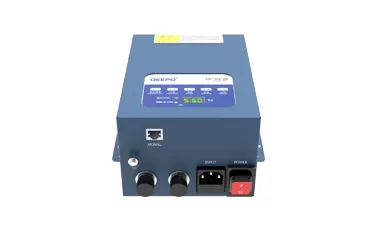
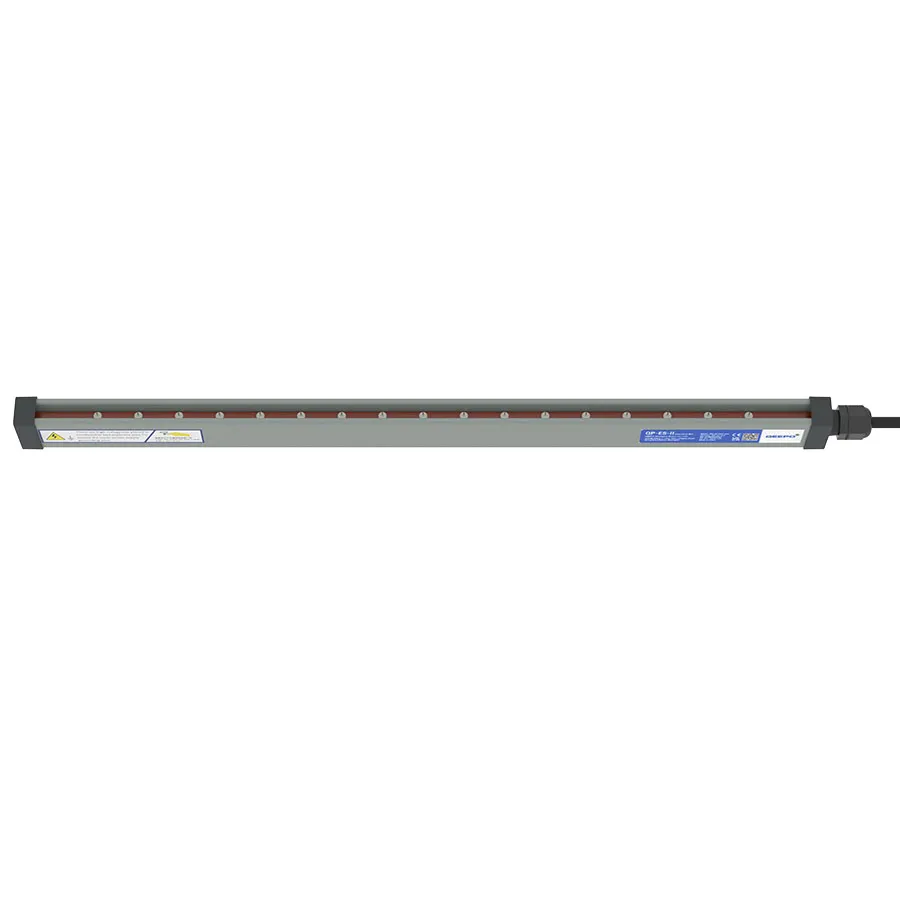
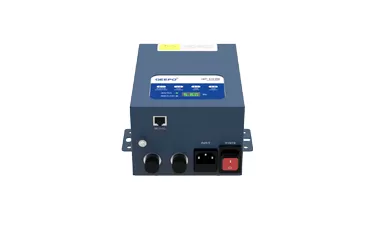
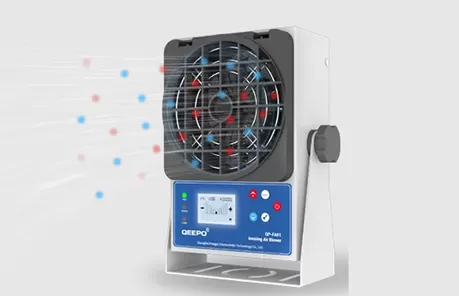
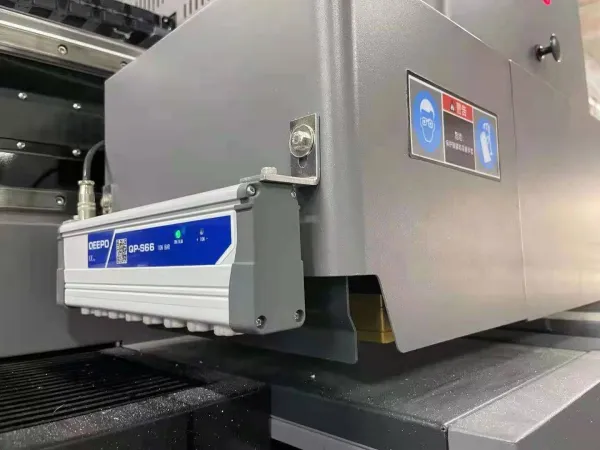
The printing zone is the core workstation for static‑electricity mitigation. QP‑S66 static eliminators shall be symmetrically installed on both sides of the print‑head carriage. They neutralize static electricity on the material surface in real time following the printing path, eliminate interference of local electric fields with ink‑drop flight trajectories, and fundamentally resolve ink splatter and registration offset. They also reduce dust adsorption toward the print‑head area and lower nozzle‑clogging probability.
In dry environments, air and material surfaces feature high resistivity. Charges cannot dissipate naturally and high‑voltage static‑electricity accumulation readily occurs. Maintaining ambient relative humidity within the suitable range of 40%‑60% RH is a basic measure to reduce static‑electricity build‑up intensity.
Standardized earthing is an essential foundational measure for industrial static‑electric‑protection systems. Connecting equipment to earth conducts static charges to ground so as to avoid static‑electric interference with equipment.
By deploying static eliminators combined with ambient‑humidity management and standardized operation & maintenance, static‑electricity mitigation for UV printing can greatly reduce quality defects such as ink splatter and smudged spots, extend printhead service life and boost finished‑product yield.

 +86-17717352246
  andy@qeepo.cn
 English
  日本語
日本語  한국어
한국어  français
  Español
  русский
  português
  العربية
  tiếng việt
  ไทย
ไทย  Polska