Static electricity is generated at every stage of electronics manufacturing, from incoming raw material delivery and material transfer, through SMT mounting, soldering & assembly, inspection & testing, to finished product packaging and warehousing. Electronic components are generally characterized by high integration, miniaturized size and low withstand voltage. Static electricity poses major hidden risks during their production, assembly and storage processes, with hazards falling into four core categories:
Instant high voltage generated by electrostatic discharge (ESD) can puncture precision components including chips, resistors, capacitors and PCBs. Some damages present as latent failures: no abnormalities are detected during factory inspection, yet sudden malfunctions occur after a period of service, drastically raising after-sales rework rates.
Static electricity causes electrostatic attraction between components, chips and carrier tapes, resulting in mounting offset, missing components and abnormal picking. It also leads to uneven solder paste distribution and cold solder joints, directly increasing the volume of defective products on production lines.
Workshop dust and lint are attracted by static electricity and adhere to circuit boards, casings and display panels, causing contamination and scratches that compromise appearance quality. Plastic housings may also suffer from sticking to molds and difficult demolding due to static buildup.
High-voltage static electricity disrupts circuit signals of automated equipment and testing instruments, triggering false equipment activation and inaccurate test data, undermining the operational stability of the whole production line.
A full-process ESD protection system is established covering four dimensions: source control, real-time static neutralization, standardized management and routine inspection & patrols.
Lay anti-static flooring or anti-static floor mats on the ground; adopt anti-static materials for workbenches and turnover carts, with reliable grounding to dissipate accumulated static charge.
Regulate workshop temperature and humidity, maintaining relative humidity between 45% and 65%. Appropriate air humidity effectively suppresses static generation and accumulation on object surfaces.
Install anti-static access control gates and grounding posts at entrances/exits and workstations to build a full-area grounding network.
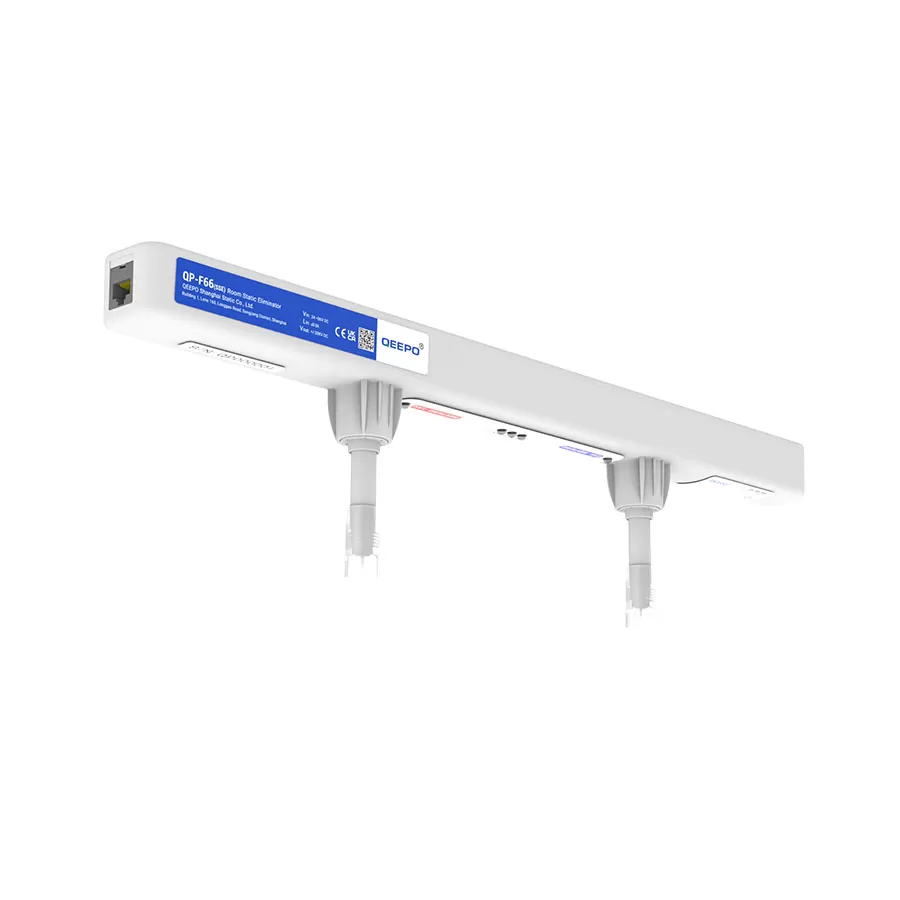
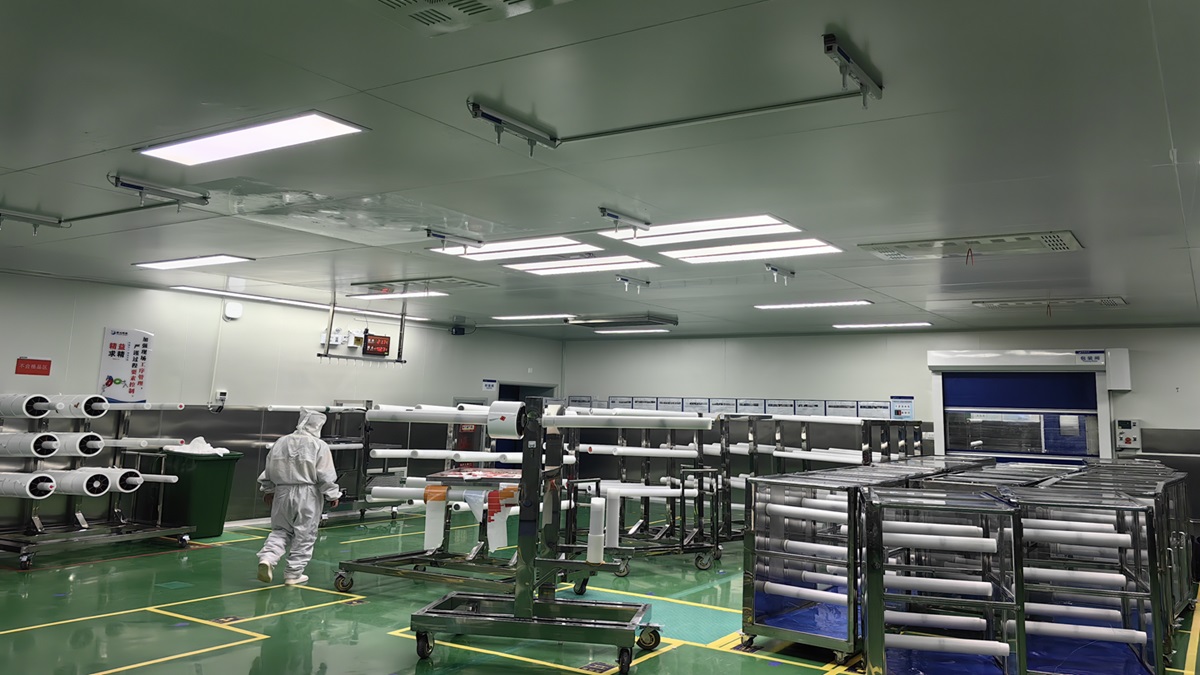
Equip cleanrooms with QP-F66(SSE) Room Static Eliminators to resolve static issues over a wide area, meeting both cleanroom classification and ESD protection standards simultaneously.
All operators shall wear anti-static wrist straps, anti-static garments and anti-static shoes uniformly, and discharge static charge before starting work.
Conduct regular ESD training to standardize operating procedures, and prohibit direct bare-hand contact with component pins and circuit boards.
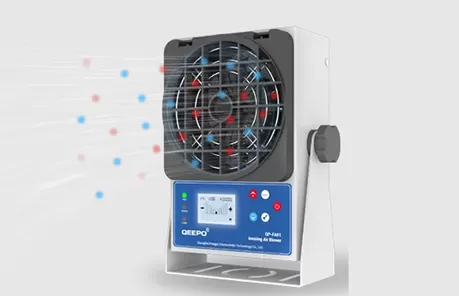
Fixed-point static neutralization at workstations: Install ion fans and ion air bars at mounting, soldering and assembly stations to neutralize static charge on object surfaces and prevent component adhesion and electrostatic discharge.
Dynamic continuous static elimination for production lines: Fit static eliminators on production lines and conveyor tracks to deliver uninterrupted static neutralization and support seamless continuous production.
Store and transport components, semi-finished and finished products uniformly using anti-static bags, anti-static turnover boxes and anti-static trays.
Store materials in separate zones, away from high-static packaging materials such as chemical fibers and ordinary plastics to reduce secondary static charging.
Deploy professional QP-ESD201 Electrostatic Fieldmeter and QP-C01 Series Electrostatic Sensor to monitor electrostatic voltage on workstations, equipment and material surfaces, ensuring static levels stay within safe ranges.
Periodically inspect the operational status of grounding circuits, static elimination equipment and protective supplies, and carry out timely repair or replacement to sustain long-term stable operation of the protection system.

 +86-17717352246
  andy@qeepo.cn
 English
  日本語
日本語  한국어
한국어  français
  Español
  русский
  português
  العربية
  tiếng việt
  ไทย
ไทย  Polska