Lithium-ion battery separators are highly susceptible to static charge accumulation during manufacturing due to high-speed friction, peeling separation, and extremely dry production environments. Electrostatic charges not only induce process defects but also directly trigger critical safety risks in battery cells, including micro short circuits, self-discharge, and thermal runaway. This makes static electricity a hidden yet severe threat to the entire lithium-ion battery separator sector.
The lithium-ion battery separator is a critical yet fragile core component within the cell, often referred to as the “safety heart” of the battery. It physically isolates the positive and negative electrodes to ensure electronic insulation while providing microporous channels for lithium-ion transport. In the event of overheating, the separator triggers a pore-closure mechanism to prevent further ion migration, thereby safeguarding the electrochemical performance and intrinsic safety of the lithium-ion battery.
Unwinding and peeling: Interlayer separation of separator rolls generates rapid charge buildup.
Roller friction: High-speed sliding and rolling contact with aluminum or rubber rollers.
Slitting and shearing: Blade cutting and edge-airflow tearing during slitting.
Rewinding and lamination: Repeated interlayer compression, slippage, and separation.
Winding and stacking: Contact, peeling, and alignment movements with electrode sheets.
Dust and foreign particle adsorption: Strong electrostatic fields attract micron-sized dust, metal debris, and electrode powders from the air, which are then carried into the cell, forming internal short-circuit points.
Separator deformation: Electrostatic repulsion and attraction cause wrinkling, “chrysanthemum-edge” defects, uneven tension, and irregular end faces, rendering subsequent slitting and processing impossible.
Web break risk: Electrostatic adhesion and tension fluctuations lead to frequent web breaks on high-speed lines.
Equipment interference: High-voltage static charges disrupt CCD vision systems, tension sensors, and edge-position control (EPC) systems, resulting in positioning errors and control failures.
Electrostatic discharge (ESD) breakdown: Voltages exceeding 5,000 V can puncture 10–40 μm separators, creating pinholes, invisible micro-damage, and conductive micro-channels that are difficult to detect visually.
Internal micro short circuits: Breakdown sites or adsorbed contaminants enable indirect contact between positive and negative electrodes, causing self-discharge, capacity fade, and localized overheating.
Thermal runaway hazards: Persistent micro short-circuit heating triggers separator shrinkage and electrolyte decomposition; in extreme cases, this leads to venting, fire, or explosion.
Consistency degradation: Electrostatic effects cause fluctuations in separator thickness and porosity, significantly increasing cell-to-cell variation in internal resistance, capacity, and cycle life.
Separator production involves continuous friction, peeling, and high-speed movement. Combined with the material’s inherent high insulation and the dry production environment, static charges accumulate persistently and are difficult to dissipate. In downstream cell winding and stacking processes, high-voltage static generated by rapid peeling and friction readily attracts dust, causes membrane wrinkling, or leads to dielectric breakdown, ultimately resulting in micro short-circuit risks within the finished cell.
Static control must therefore be implemented in two distinct process stages:
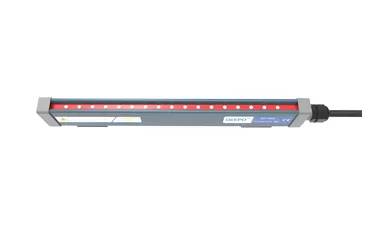
Extrusion, casting, and stretching sections: Employ low-friction guide rollers; apply conductive treatment and reliable grounding to all critical rollers to minimize triboelectric charging. Install QP-H66 static eliminators for active neutralization.
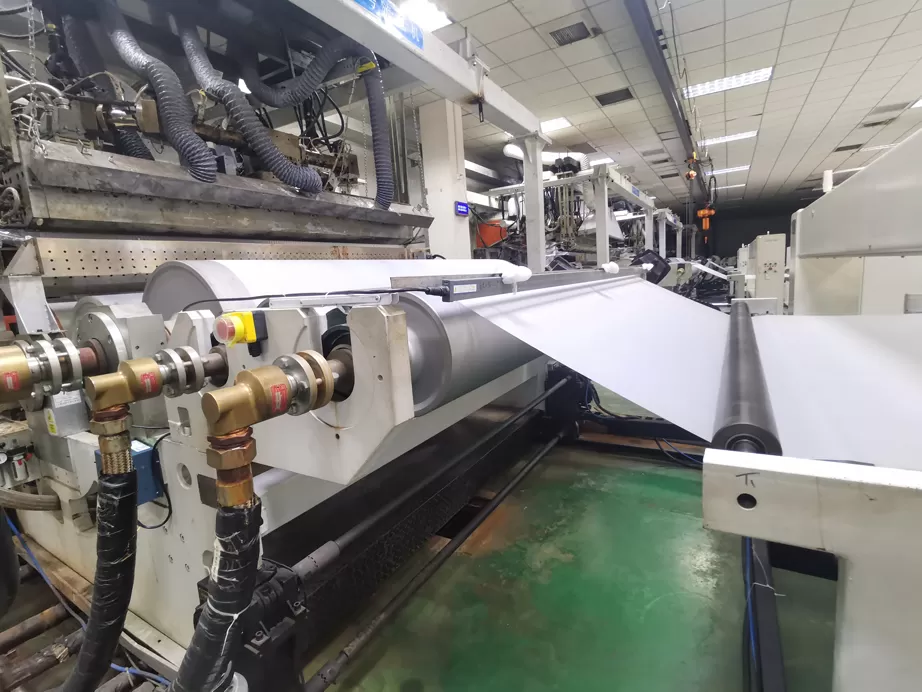
Extraction and drying sections: Maintain controlled ambient humidity and install ion bars immediately after the drying zone to neutralize residual charges.
Heat-setting sections: After high-temperature relaxation, promptly neutralize charges using QP-N35 high-temperature-resistant static eliminators to prevent sustained membrane charging under dry conditions.
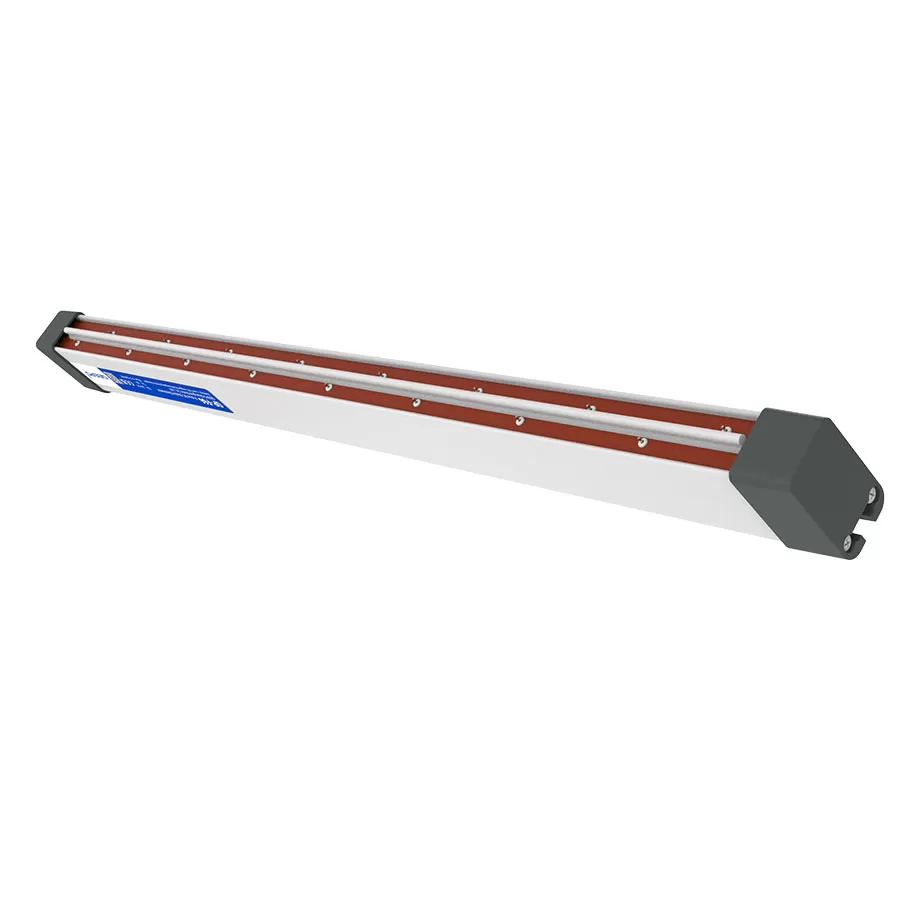
Rewinding and slitting sections: Deploy dual-sided QP-ES ion wind bars before rewinding, combined with conductive support rollers, to achieve highly efficient charge neutralization.
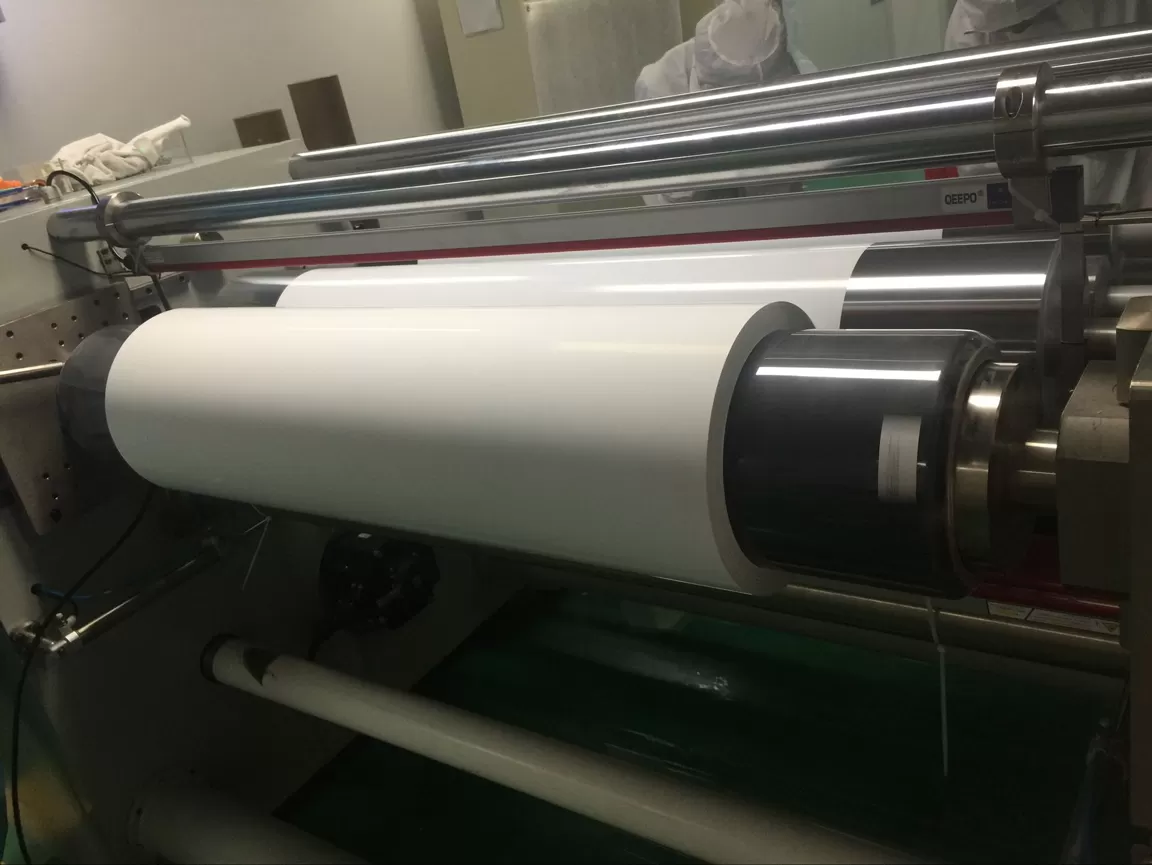
Electrode slitting and calendering sections: Install QP-ES static eliminators to neutralize friction-induced charges; ensure reliable grounding of all equipment and roller shafts to suppress charge accumulation.
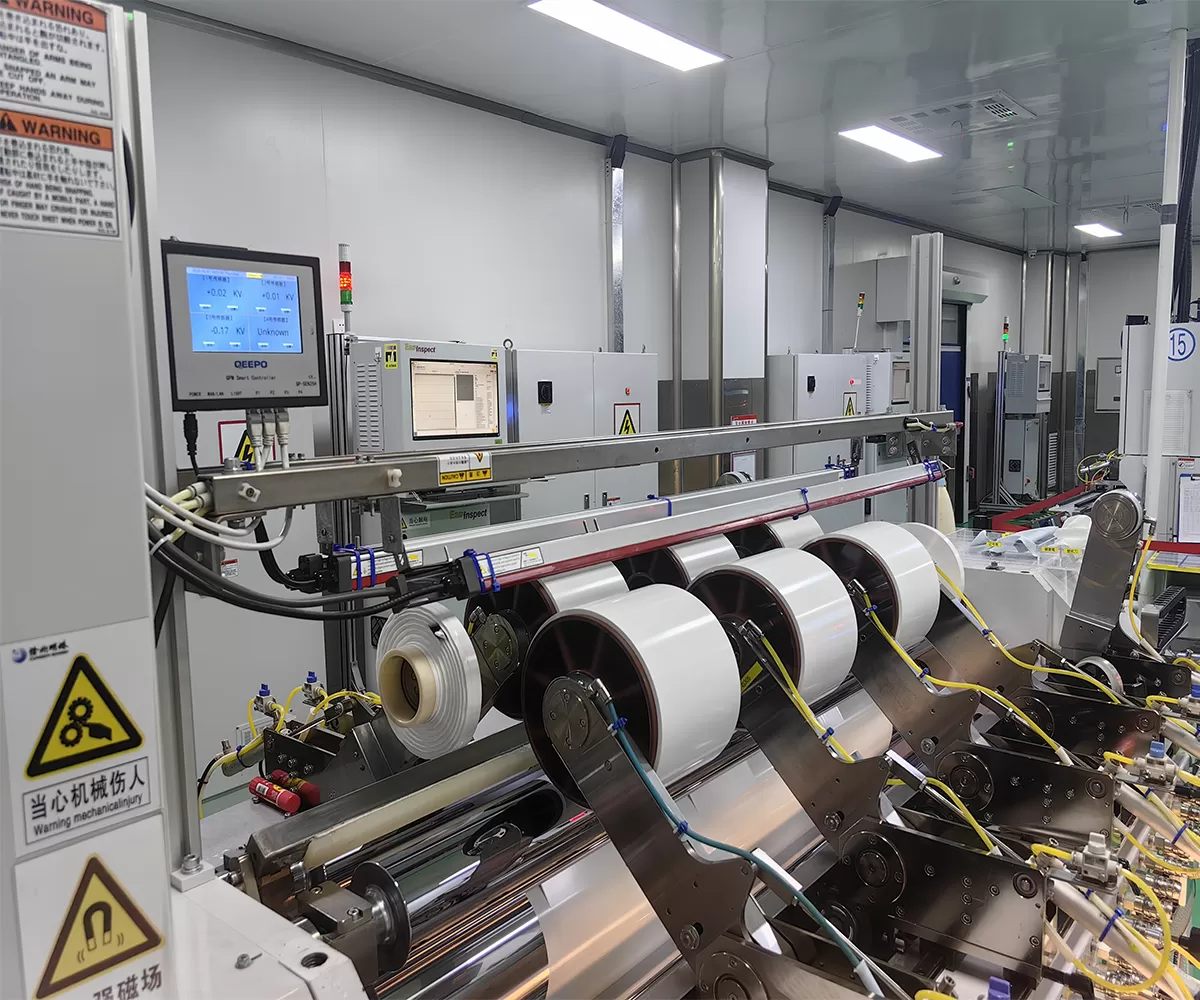
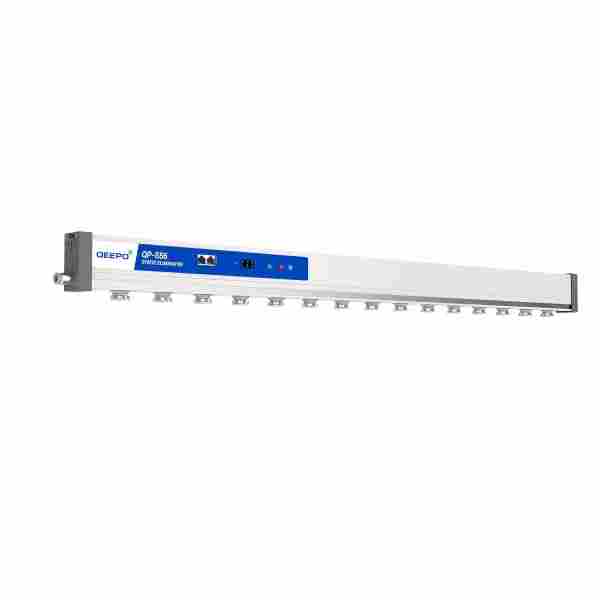
Winding/stacking sections: Mount dual-sided QP-S35 intelligent static eliminators upstream of electrode and separator feed stations to minimize electrostatic attraction, misalignment, and dielectric breakdown.
Electrolyte filling and sealing sections: Maintain controlled workshop humidity to reduce dust adsorption and prevent static interference with filling uniformity.
Formation, capacity grading, and testing sections: Implement standardized grounding for all cell housings and fixtures to avoid electrostatic discharge damage to finished cells.
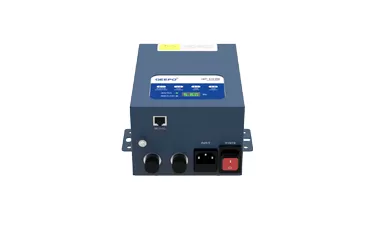
Throughout the entire process, integrate QP-C01 static sensors for real-time monitoring, strictly controlling surface potential within safe limits to enhance cell consistency and safety.
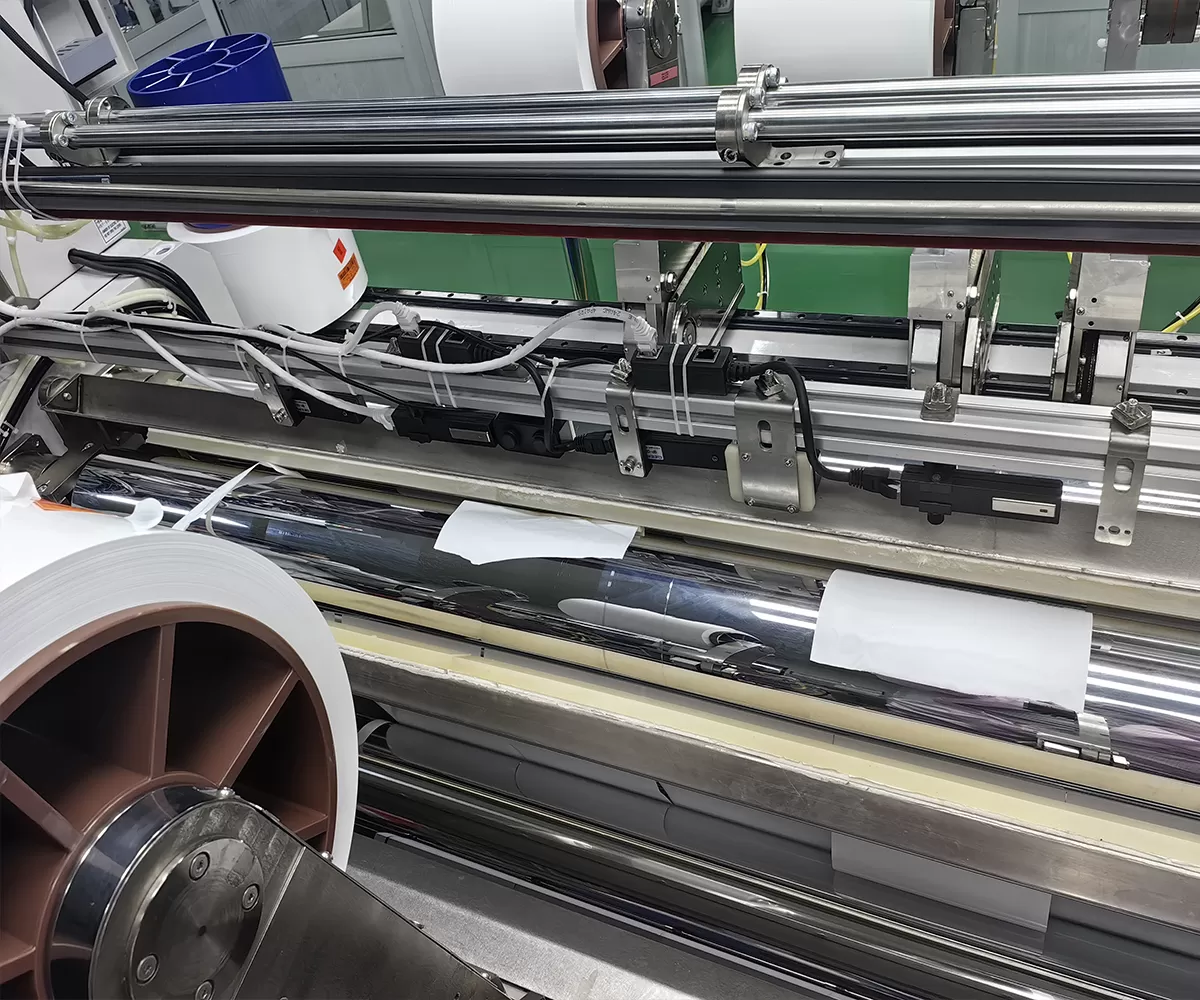
The fundamental strategy combines “active ion neutralization + passive grounding dissipation,” supported by precise environmental humidity control and process optimization. By applying targeted, stage-specific electrostatic countermeasures and continuous monitoring, static potential is maintained within safe operating ranges from the source, effectively eliminating hidden risks, ensuring product quality, and safeguarding production safety.

 +86-17717352246
  andy@qeepo.cn
 English
  日本語
日本語  한국어
한국어  français
  Español
  русский
  português
  العربية
  tiếng việt
  ไทย
ไทย  Polska